Works
asynctp.tokyo
The site you are reading. A Next.js application on the App Router, with posts and work entries written in MDX and rendered through next-mdx-remote, styled with Chakra UI.
The home page greets visitors with a VRM avatar rendered in Three.js via @react-three/fiber and @pixiv/three-vrm. Link cards are built from metadata prepared ahead of time rather than fetched on render.
The site sets a strict Content Security Policy and HSTS, and guards against path traversal when resolving content files. TypeScript, Biome and Jest cover the build.
asynct(VRM)

This is my personal VRM avatar created with VRoid Studio and featured on the top page of this portfolio. The model showcases a custom-designed character with detailed facial expressions and animations. Built using the VRM format for universal compatibility across various platforms and applications. The avatar serves as my digital representation in virtual environments and 3D web experiences. You can interact with the model through the Three.js-powered viewer on the homepage.
sabidb
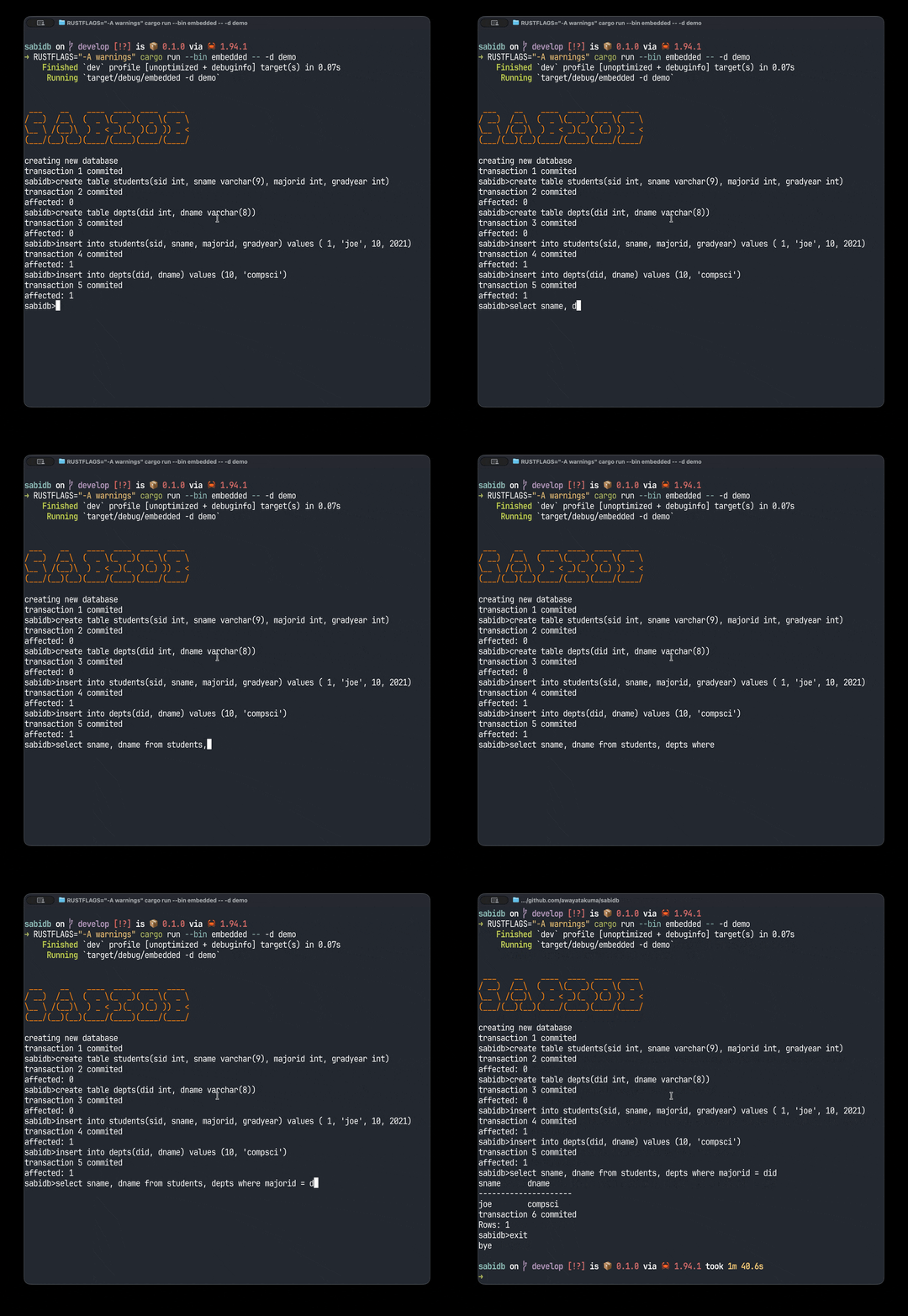
A fully-featured relational database management system (RDBMS) implemented from scratch in Rust, showcasing modern database architecture and optimization techniques.
Core Features:
- SQL Query Engine - Complete SELECT, INSERT, UPDATE, DELETE operations
- DDL Support - Dynamic table and index creation/management
- Advanced Joins - Inner joins, outer joins with predicate filtering
- Transaction System - ACID compliance with basic concurrency control
- Query Optimization - Heuristic-based query plan generation
- Storage Engine - Multi-buffer pool management for efficient I/O
- Indexing - B-tree index structures for fast data retrieval
Tech Stack:
- Rust - Systems programming language for memory safety and performance
- Custom Storage Layer - Hand-built page management and buffer pool
- SQL Parser - Recursive descent parser for SQL statement processing
dotfiles
My personal development environment configuration built with modern terminal-based workflows and comprehensive tool integration.
Tech Stack:
- Lua - Neovim configuration and plugin customization
- Shell scripts - System automation and installation scripts
- Alacritty - GPU-accelerated terminal emulator
- Git - Version control configuration and aliases
- Neovim - Primary editor with extensive Lua-based plugins
- Vim - Legacy compatibility and fallback editor
- Zellij - Terminal multiplexer for session management
- Zeno - Completion framework optimized for ROS development
- Zsh - Shell with custom environment and prompt settings
- GitHub Actions - Automated deployment and CI/CD workflows
monkey-lang
A tree-walking interpreter for the Monkey language, written in Go: a hand-written lexer, a Pratt parser that resolves operator precedence by binding power, and an evaluator walking the AST with an environment chain for scope.
The language has closures, first-class and higher-order functions, strings, arrays, hashes, and a macro system with
quote and unquote that expands before evaluation.Built by following Writing An Interpreter In Go by Thorsten Ball, including the macro chapter.
mikanos
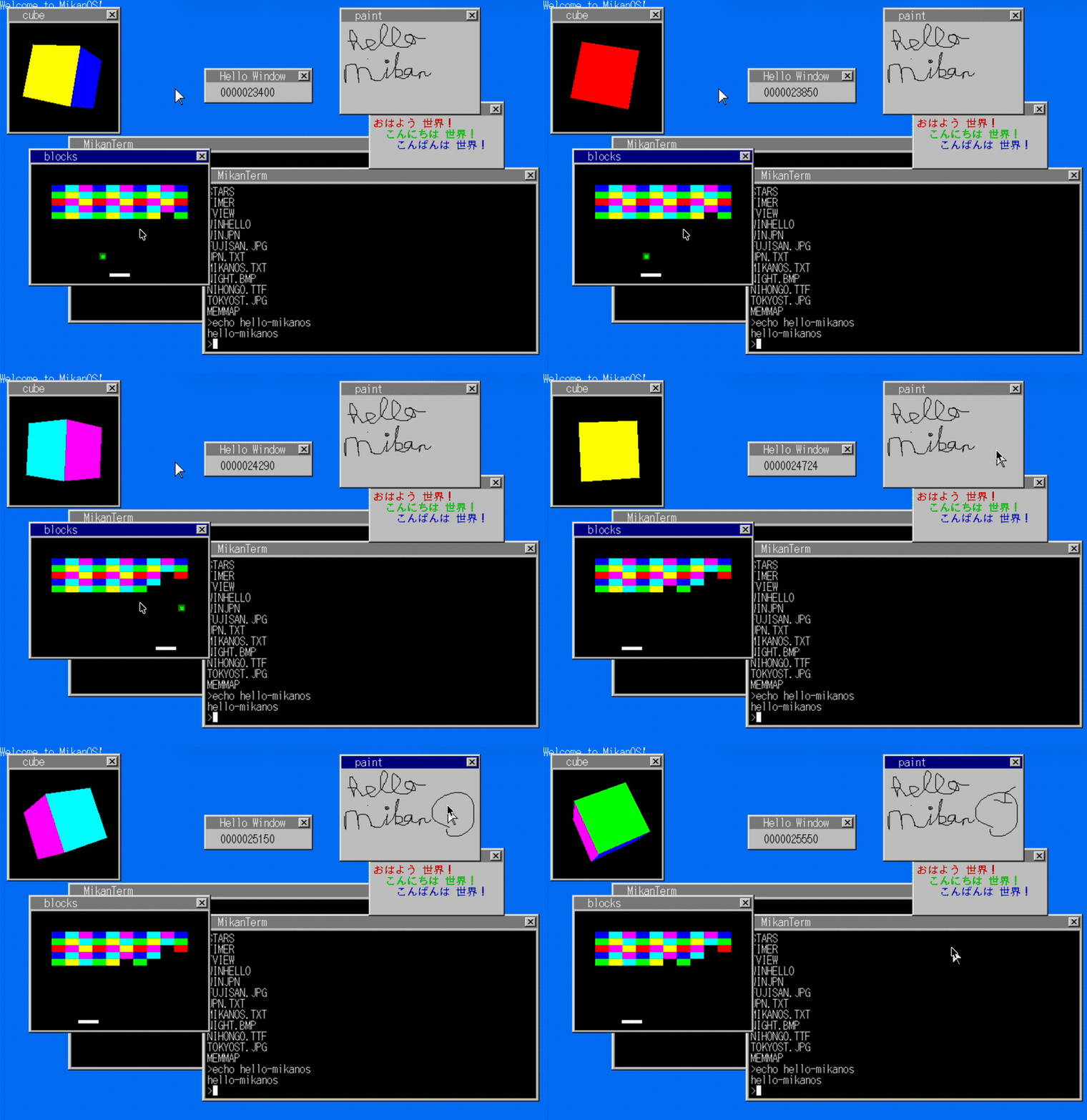
An x86_64 operating system built from scratch in C++, from a UEFI bootloader up to userland applications. The recording shows five of them running at once in overlapping windows — a rotating 3D cube, a breakout game, a paint program driven by mouse input, a window rendering Japanese text with a TrueType font read from the FAT volume, and two terminals.
Paging, interrupt handling, an xHCI USB driver stack, layered window compositing, preemptive multitasking, a FAT32 filesystem and a system call interface are all implemented in the kernel.
Built by following 『ゼロからのOS自作入門』 (Uchida Kota, Mynavi Publishing, 2021).